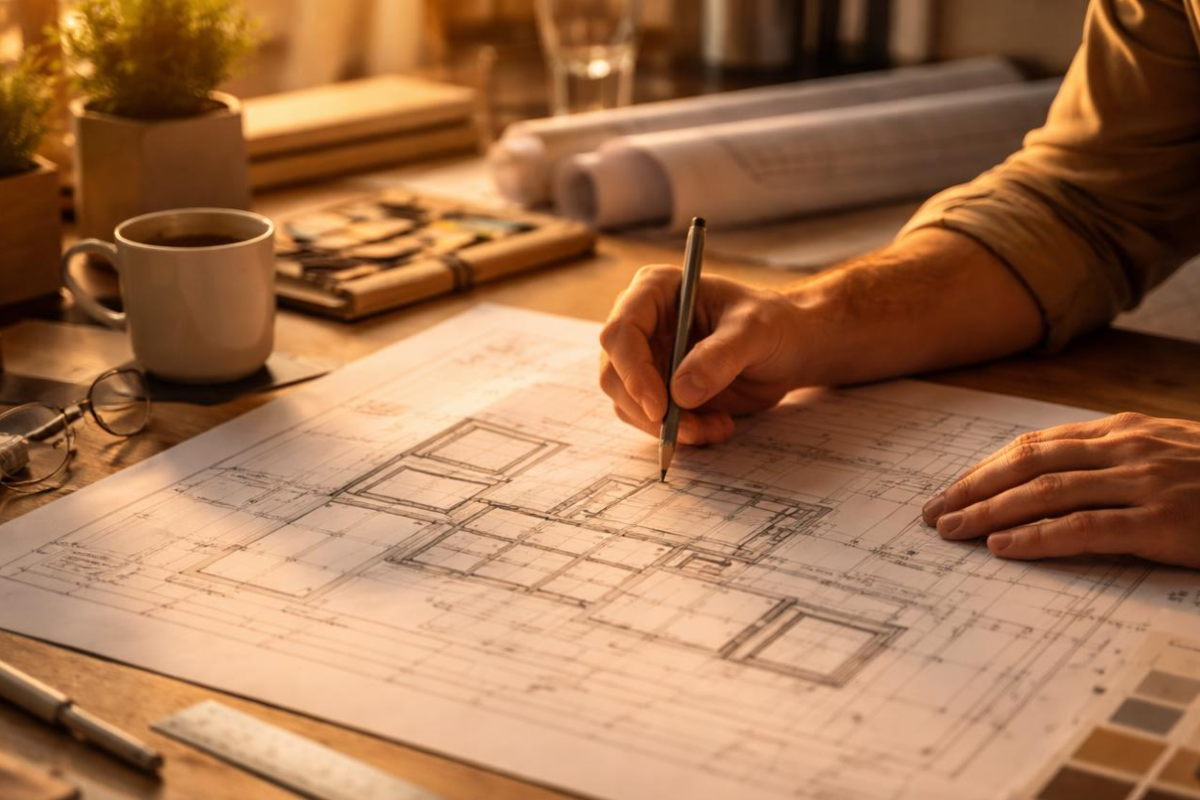
Kitchen renovations have a way of looking simple from a distance.
You pick a style. Choose cabinets. Pick a counter top. Maybe swap the appliances. Then the drawings start, trades get involved, and suddenly you are making decisions about filler panels, venting, walkway clearances, plumbing locations, and whether that wall you wanted removed is carrying half the floor above it.
That is why the smartest kitchen projects usually begin with questions, not finishes.
Before you commit to a layout or order a single cabinet, step back and answer five things honestly. These questions shape the design, the budget, the build sequence, and the day-to-day experience of living through the work. They also make life easier for your designer, your cabinet maker, and your contractor, because everyone is working from the same assumptions.
If you skip this step, you usually pay for it later. Sometimes with money. Sometimes with time. Often with both.
A kitchen is one of the most complicated rooms in a home or commercial space. It combines plumbing, electrical, ventilation, appliances, storage, traffic flow, finishes, lighting, and a surprising number of little measurements that cannot be “figured out later.”
Good planning does three important things:
That last point matters more than people think. A kitchen can look beautiful in a rendering and still be annoying every single day. A drawer can hit an appliance handle. A dishwasher can block the path to the sink. An island can feel generous on paper but cramped in real life. Good cabinet design is not decoration. It is problem-solving.
With that in mind, here are the five questions worth answering before your renovation starts.
This is the first question for a reason. Budget controls almost every other decision.
People often say, “We’ll figure out the numbers once we see what we like.” I understand the instinct, but it usually leads to wasted time. If your budget is unclear, your design process gets fuzzy too. You may spend weeks reviewing layouts and materials that were never realistic for your project.
A clear budget does not mean you need an exact final number on day one. It means you need a range you are willing to commit to, plus a basic idea of where the money will go.
Most kitchen budgets should account for these categories:
That last item matters. Older homes especially can hide problems behind walls and under floors. Water damage, uneven framing, outdated wiring, and venting issues are common. If your budget is already stretched to the limit before demolition starts, every surprise feels like a crisis.
A practical rule is to hold back a contingency fund rather than spending every dollar on finishes.
People often think of budget in terms of “cheap cabinets versus expensive cabinets,” but the effect is broader than that. Budget shapes:
It also affects schedule. Special-order materials and custom fabrication can extend lead times.
Instead of saying, “We want a nice kitchen,” try this:
That kind of clarity helps a designer or cabinet maker create options that fit your priorities, not just your Pinterest board.
Appliances are not the finishing touch. They are part of the layout.
This is one of the most common planning mistakes in kitchen renovations: cabinets get designed first, then appliance decisions arrive later and force revisions. A wider fridge, a taller wall oven, or a panel-ready dishwasher can change cabinet sizes, filler requirements, electrical locations, and walking clearances.
Choose your appliance approach early, even if you have not purchased every model yet.
A few choices have an outsized effect on the room:
Panel-ready appliances blend into the cabinetry. Stainless or colored finishes stay visually separate. Neither choice is wrong, but they create different design conditions.
Panel-ready units often require more careful planning around door thickness, hinge swing, and surrounding panels. They can create a cleaner look, but they also change the cabinet package and cost.
A range combines cooktop and oven in one location. Wall ovens separate the baking zone from the cooktop area. That can work very well for households that cook often, but it changes lower storage, upper cabinet options, and electrical needs.
It also affects ergonomics. Some people love wall ovens because they reduce bending. Others prefer the simplicity of a standard range. Both are reasonable.
This one gets underestimated all the time. A 36-inch fridge and a 48-inch built-in create very different kitchens. Depth matters too. Counter-depth units sit differently than full-depth models and influence aisle space.
Large households, frequent entertainers, and clients who bulk shop may need more cold storage than a standard layout assumes. If that is your situation, it is better to design around it now than regret it later.
Microwaves, beverage fridges, coffee systems, wine storage, ice makers, and warming drawers all need homes if they are part of the plan. Each one affects outlets, ventilation, cabinet openings, and workflow.
I think this is where honest self-assessment helps. Many people design for an imaginary version of themselves. The home baker. The entertainer. The person who meal preps every Sunday. If that is really you, great. If not, do not give premium square footage to appliances you will barely use.
Try to gather these details early:
Even if the exact model changes later, this gives your cabinet design a reliable starting point.
This is the reality check question.
A lot of kitchen ideas look easy until the site conditions enter the conversation. You may want to move the sink to the island, remove a wall, widen an opening, relocate the range, or install a larger window. Sometimes that works. Sometimes the structure, plumbing, or electrical system says no, or at least “not without a bigger budget.”
That does not mean the design is ruined. It just means the design needs to respect the building.
Here are the usual suspects:
If this is a condo, multi-unit building, or commercial setting, there may be even more restrictions. Building rules, common services, and permit requirements can limit what is allowed.
When immovable elements are not disclosed at the beginning, you end up designing the wrong kitchen. Then someone measures the site more carefully, spots the problem, and the whole plan has to be revised.
That costs time, and sometimes design fees. It also creates frustration because people get attached to layouts that were never buildable.
A better approach is to list all known constraints from the start. Mark what can move, what probably can move, and what definitely cannot move.
A constrained kitchen is not a failed kitchen. Some of the best layouts come from smart responses to awkward conditions.
If a full island does not fit, a peninsula may work better. If upper cabinets would make a small room feel tight, open shelving in a limited zone can help. If plumbing must stay where it is, storage and prep zones can be reorganized around it.
This is where experience really shows. A strong designer sees limitations and starts solving. They do not keep forcing an idea that the room refuses to support.
A kitchen project can have a good design and still go badly if the execution is weak.
This is one of the uncomfortable truths of renovation. Homeowners and project managers often spend weeks choosing finishes and very little time vetting the people who will actually install them. Then the project stalls because the contractor is overbooked, communication is poor, or the install quality does not match the plan.
You do not need just any contractor. You need one who is suitable for your project size, schedule, and level of detail.
A contractor influences:
That last one matters a lot. Problems will come up. The difference between a manageable renovation and a miserable one is often how those issues are handled.
Before hiring, ask practical questions:
Also ask for references. Then actually call them.
People tend to ask, “Were you happy?” A better question is, “What went wrong, and how did the contractor deal with it?” That tells you much more.
Securing a contractor early helps your whole project move more smoothly. Cabinet lead times, site prep, rough-ins, templating, and installation all depend on scheduling. If you finalize your design but wait too long to line up the contractor, you may end up with materials ready before the site is ready.
That kind of delay can ripple through the entire job.
If you already have a trusted contractor, bring them into the conversation early. If you do not, start searching before you approve final drawings.
This question sounds less technical, but it affects the project more than people expect.
Kitchen renovations are disruptive. There will be noise. Dust. Deliveries. Workers in and out. Limited access to water, food prep, dishwashing, and storage. If you are living in the home during construction, the inconvenience is not a side issue. It becomes part of daily life for weeks, sometimes longer.
People underestimate this all the time. Then the demolition starts, and everyone is eating takeout beside a microwave balanced on a folding table.
During a kitchen remodel, you may temporarily lose access to:
If children, older adults, or people with mobility needs are in the home, planning matters even more. The same goes for anyone working from home.
A little preparation goes a long way here. Before work begins, think through:
If the renovation is large, some people choose to relocate temporarily. Others stay and simplify routines. There is no single right answer. The mistake is pretending the disruption will be minor when the scope says otherwise.
This may be the least glamorous advice in the article, but I think it is one of the most useful: assume the project will be inconvenient, and plan for that honestly.
If everything goes more smoothly than expected, great. If not, you are not mentally blindsided.
Before you move from ideas to execution, make sure you can answer these points clearly:
If any of these answers are vague, pause. You do not need perfect certainty, but you do need enough clarity to make good decisions.
A kitchen renovation is part design project, part construction project, and part logistics exercise. That mix is exactly why people get overwhelmed. The good news is that the early questions do most of the heavy lifting.
Once you know your budget, appliance direction, site limits, contractor plan, and disruption strategy, the rest of the process becomes much easier to manage. You can compare layouts more intelligently. You can make cabinet design choices that suit the room. You can speak with your contractor and cabinet maker in a more useful way. And you are much less likely to get surprised by issues that should have been obvious at the start.
The expensive mistakes are often boring ones. A missed measurement. A late appliance change. A contractor booked too late. A layout drawn without respect for plumbing or structure. None of that is exciting. All of it is avoidable.
Answer the five questions first. Your future kitchen, and your future self, will thank you for it.

.png)


