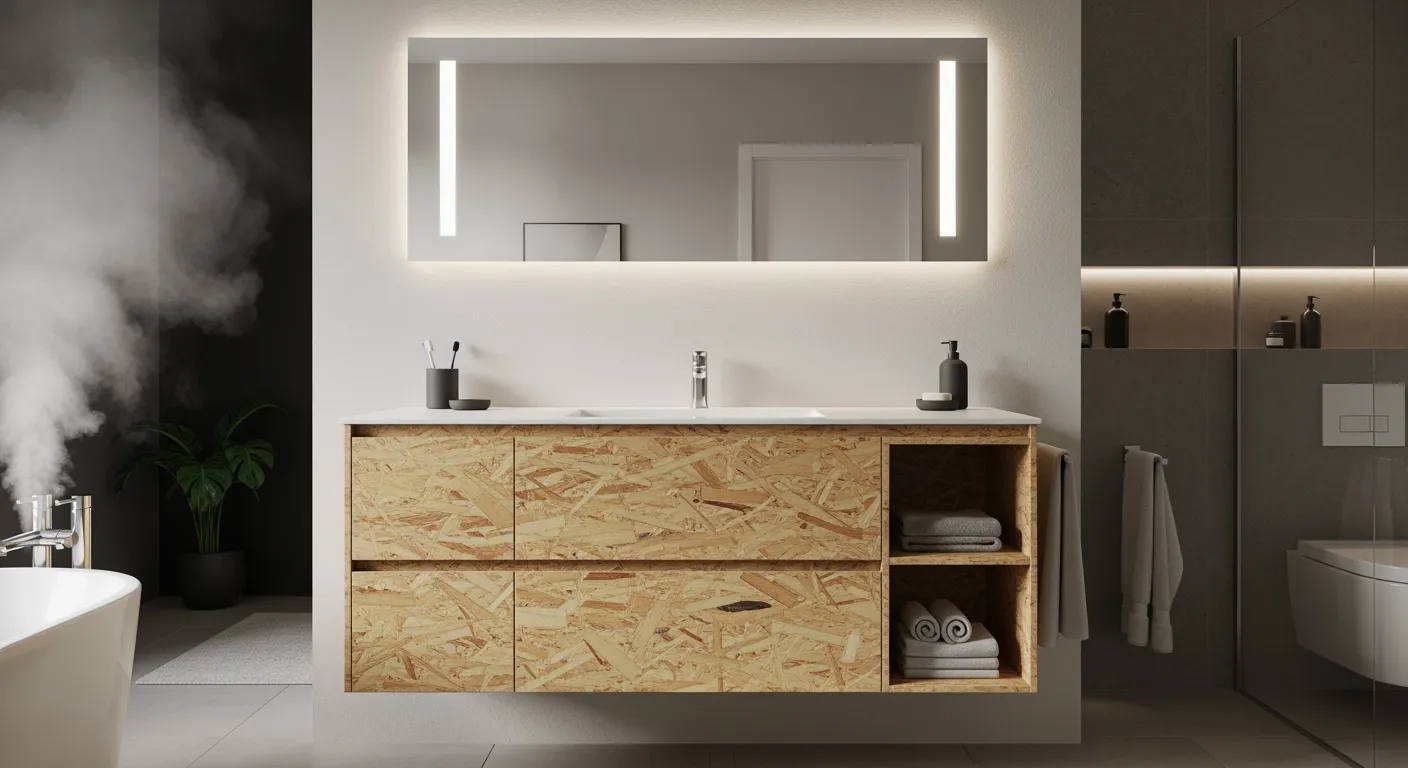
Bathrooms in British Columbia deal with more moisture than many people expect. It is not only the steam from showers. It is the long wet season, cooler outdoor temperatures, windows that stay closed for much of the year, and the slow buildup of indoor humidity. In a place like Vancouver, that combination can punish the wrong vanity materials.
If you are planning a custom bathroom vanity in Vancouver, the material choice is not a detail to leave until the end. It affects how the vanity looks in two years, how it functions in ten, and how much maintenance you will deal with in between. Swollen panels, peeling finishes, stained toe kicks, rusty hardware, and sagging bottoms usually come back to one thing: moisture found a weak spot.
The good news is that you can avoid most of that. You just need to know where bathroom vanities typically fail and which materials hold up better in a damp room.
A bathroom vanity lives in a rough environment. It gets hit by splashes from the sink, steam from showers, wet towels draped nearby, and occasional leaks that sit unnoticed inside the cabinet. In BC, the issue often lingers because the air is already damp for much of the year. Materials do not get as many chances to fully dry out.
That matters because cabinetry is not one thing. A vanity is really a system made of box panels, door fronts, drawer parts, edge treatments, fasteners, hardware, sealants, and the counter top. One moisture-sensitive component can shorten the life of the whole unit.
I think this is where a lot of projects go sideways. People compare vanities by style and colour first, but the real story is inside the box and along the edges. A beautiful finish can hide weak construction for a while. Bathrooms eventually expose it.
For a bathroom vanity, the cabinet box matters more than many people realize. If the box swells, the doors stop lining up, drawers rub, and the finish starts breaking at the seams.
If you want a practical answer, plywood is often the strongest candidate for bathroom vanity boxes in wet climates. Good quality plywood is dimensionally stable, handles humidity changes better than particleboard, and is less likely to crumble if it gets damp. It is not waterproof, but it is more forgiving.
For side panels, bottoms, stretchers, and sink cabinet partitions, plywood tends to age better when construction and sealing are done properly. It also holds screws well, which matters for hinges, drawer slides, and mounting points.
Not all plywood is equal, though. The glue quality, number of plies, veneer quality, and consistency of the core all affect performance. A low-grade panel can still warp or delaminate.
Moisture-resistant MDF is often used for painted doors and decorative panels because it machines cleanly and gives a very smooth painted finish. In the right application, it can work well. But I would be more cautious about using MDF as the main cabinet box material in a bathroom, especially under sinks where leaks happen.
Even moisture-resistant MDF is still vulnerable if water sits on it or gets into an unfinished edge. It may outperform standard MDF, but it does not behave like plywood when things go wrong.
Particleboard is common in mass-produced cabinetry because it is affordable and consistent. In dry spaces, it can be perfectly serviceable. In bathrooms, it is often the weak link. Once water gets through an edge, a screw hole, or a failed seam, particleboard tends to swell quickly and lose structural strength.
That does not mean every particleboard vanity fails. Some hold up for years with good surface lamination and careful use. But if you are building for longevity in BC humidity, this is one of the first areas I would scrutinize.
People often assume solid wood is the premium answer for everything. Sometimes it is. Sometimes it is the headache.
Solid wood expands and contracts with humidity. In a bathroom, that seasonal movement can lead to panel cracking, joint stress, or doors shifting slightly over time if the piece is not engineered well. Solid wood is usually best used where its movement is understood and controlled, such as frames, drawer fronts, or properly constructed doors, rather than large unbroken panels.
The base material is important, but the finish is what stands between that substrate and bathroom moisture.
Thermally fused laminate, often called melamine, can work well on vanity interiors and cabinet exteriors if the panel quality is good and the edges are sealed properly. The finish is easy to clean and fairly resistant to everyday bathroom use. High-pressure laminate is tougher still and handles wear, impact, and moisture exposure better than many painted surfaces.
The catch is in the seams. If the edge banding is thin, poorly adhered, or damaged during use, moisture can get in behind the surface. Once that happens, even a durable face finish cannot protect the core.
A painted vanity can look tailored and clean, especially in custom work. For bathroom use, the quality of the paint system matters. A proper primer, a durable topcoat, and full coverage on edges and back sides all help. Painted MDF doors are common for a reason. They can look excellent.
Still, paint is not magic. Chips around corners, sink splash zones, or drawer edges can expose the substrate. In a powder room, that may not matter much. In a family bathroom used every day, it matters a lot more.
Thermofoil wraps a vinyl film over an engineered core, usually MDF. It resists surface moisture well when intact, and it is easy to wipe down. The problem is heat and edge failure. In bathrooms, steam and temperature swings can weaken adhesion over time, especially near poor ventilation or direct heat sources.
I do not think thermofoil is automatically a bad choice, but it depends heavily on manufacturing quality and the room conditions.
Wood veneer over plywood or engineered core can be a good middle ground if you want the look of wood with better stability than solid lumber. But the veneer itself is not the whole story. Edges, backs, end grain details, and finish coats need to be handled carefully. Any unfinished or weakly finished area becomes a moisture entry point.
Here is the part people skip, and it is often the part that matters most.
A vanity rarely absorbs water evenly across a big flat panel. It usually gets damaged where water sneaks in: panel edges, sink cutouts, unsealed plumbing penetrations, toe kicks, and around hardware screws.
Good moisture resistance depends on details like these:
Edge banding should be durable and fully adhered, not lifting at corners.
Sink cutouts should be sealed after fabrication, especially for undermount installations.
Exposed bottom edges near the floor need extra protection in case of mopping water or minor floods.
Back panels and plumbing openings should be finished cleanly, not left raw.
Toe kicks should not be built from materials that swell the first time water sits against them.
This is where cabinet design becomes very practical. A vanity can look simple from the front but still include smarter detailing that keeps water away from vulnerable spots.
Your counter top choice affects more than appearance. It influences staining, seam performance, cleaning, and how much water reaches the cabinet below.
Quartz is popular for bathroom vanities because it is non-porous, easy to clean, and resistant to everyday staining from soap, makeup, toothpaste, and skin care products. It does not need sealing like natural stone, which makes life simpler.
For many projects, quartz is the easy recommendation. It performs well, comes in a wide range of looks, and works for both residential and commercial-style bathroom use.
Porcelain slabs and sintered stone surfaces handle water extremely well and resist staining, heat, and UV exposure. They can be an excellent choice when you want a low-maintenance surface with a thinner, more contemporary profile.
Installation quality matters because some formats are less forgiving during fabrication. But in terms of moisture performance, these surfaces are hard to argue with.
Solid surface materials deserve more attention than they get. They are non-porous, repairable in many cases, and allow for integrated sinks with fewer seams. Fewer seams mean fewer places for moisture and grime to collect.
If your priority is easy maintenance and a clean, seamless look, this is a strong contender.
Granite, marble, and other natural stones can work in bathrooms, but they need more care. Some stones stain more easily, some etch, and most need sealing. That is not a deal-breaker. It just means you should choose stone because you truly want stone, not because you assume it is automatically the most durable option.
Laminate is budget-friendly and can perform decently when manufactured and installed well. But around sink openings, front edges, and seams, it is more vulnerable to water intrusion than quartz, porcelain, or solid surface. For a low-use bathroom, that may be acceptable. For a busy household or commercial setting, it is a compromise worth thinking through.
A vanity is opened and closed every day, often with damp hands. Moisture does not only attack panels. It affects moving parts too.
Look for hinges and drawer slides with corrosion-resistant finishes. Soft-close hardware is not just a comfort feature. It reduces slamming, which can loosen fasteners and stress joints over time. Drawer boxes made from plywood or solid wood with a durable finish usually outlast thinner particleboard alternatives.
Interior organizers should also be chosen carefully. Cheap wire inserts can rust. Unsealed accessory trays can warp. A well-built vanity feels better because the hidden parts were taken seriously.
If you are working with a cabinet maker, ask what hardware line they use and why. That question tells you a lot about whether they are focused only on the visible finish or on long-term performance.
Good material selection helps, but design can make the whole vanity easier to live with.
A floating vanity is one example. It keeps the cabinet off the floor, which reduces contact with standing water from mopping, overflows, or wet bath mats. It also makes cleaning easier.
Integrated backsplashes help protect wall edges and reduce water running behind the unit. Sink styles matter too. An undermount sink with a well-sealed cutout is easier to wipe down than a setup that traps water along seams. Wide drip-prone faucet spreads may need more splash consideration than a more compact faucet layout.
Ventilation matters as much as materials. Even the best vanity will have a harder life in a bathroom with poor exhaust. If the room stays damp for hours after each shower, the finish, joints, and hardware all pay the price.
I would also pay attention to clearance around plumbing. If supply lines or drains are crammed into the cabinet with rough cutouts, future repairs are more likely to scrape finishes and open raw edges.
When comparing quotes or reviewing shop drawings, a few direct questions can save trouble later:
What material is used for the cabinet box, and is it different from the door material?
Are sink cutouts and exposed edges sealed after fabrication?
What finish is used on painted surfaces?
What material is used for drawer boxes and toe kicks?
What hardware finish is specified for bathroom use?
How is the counter top joined or integrated at the sink area?
These are practical questions, not technical theater. A good answer should be clear. If the response sounds vague, that is useful information too.
Every project has a budget. That part is real. But bathrooms are one of the worst places to save money on moisture-sensitive components.
If you need to prioritize, spend first on the cabinet box material, edge protection, hardware quality, and the sink and counter top area. You can often simplify a door style or choose a more restrained finish without hurting performance. Cutting corners on the substrate or moisture detailing is harder to recover from later.
For renovations, think about the bathroom you actually have, not the one in the showroom. Is it used by kids? Does it have poor fan performance? Does water end up on the floor often? Is it a rental, a primary ensuite, or a commercial washroom? The honest answers should shape the material choice.
For most bathroom projects in BC, a durable recipe looks something like this: a plywood cabinet box, well-sealed edges, quality hardware, and a low-maintenance counter top such as quartz, porcelain, or solid surface. Painted or veneered finishes can work very well if the manufacturing and sealing are done properly. Materials like standard particleboard need closer scrutiny, especially under sinks and near the floor.
That may not be the cheapest route up front. It is often the cheaper route after a few wet winters.
When you choose materials for a custom bathroom vanity Vancouver project, you are really choosing how the vanity will react to humidity, splashes, cleaning routines, and the occasional plumbing surprise. Good cabinet design takes all of that seriously. A careful cabinet maker will too. And if you are selecting both cabinetry and counter top materials at the same time, you will end up with a vanity that looks right on day one and still feels solid years later.

.png)


