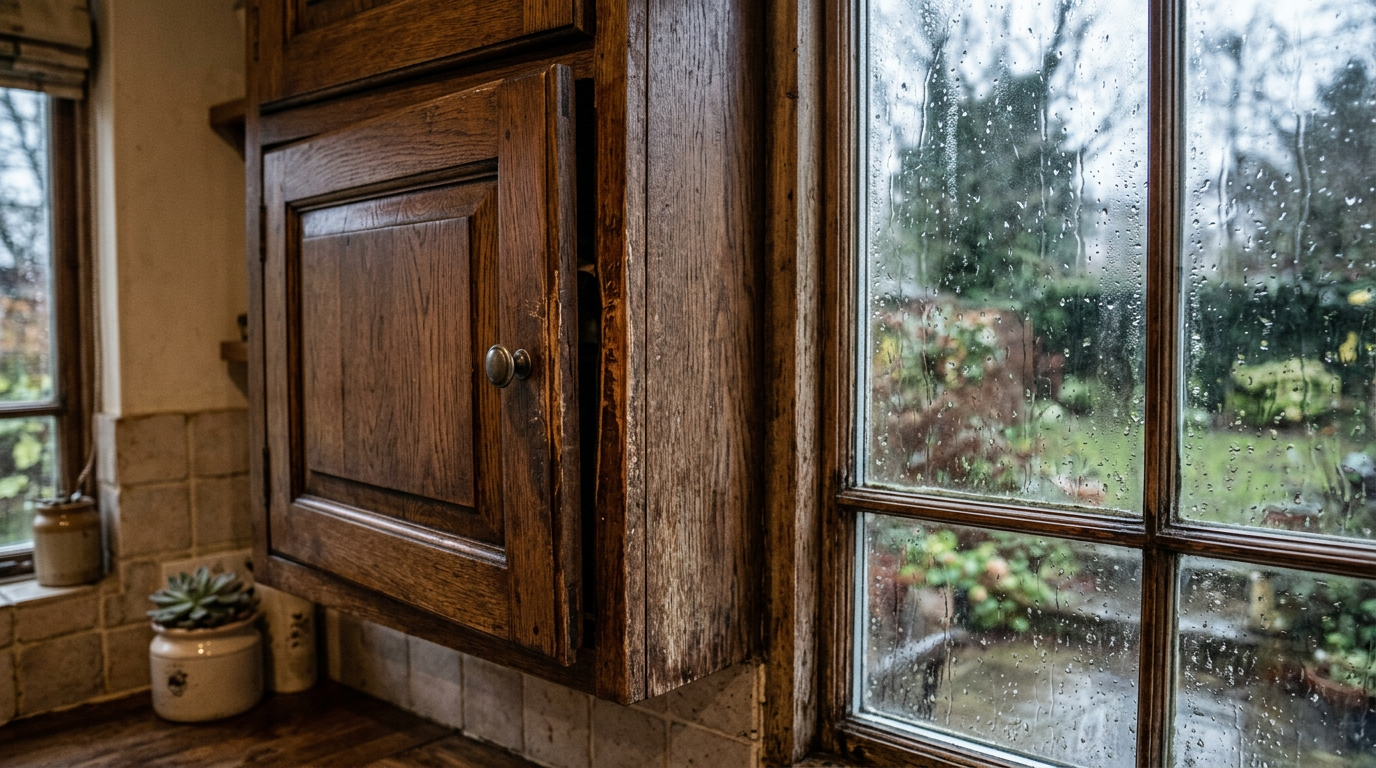
A cabinet door that suddenly rubs, catches, or refuses to close cleanly can be frustrating, especially when it worked perfectly a few months earlier. In many Pacific Northwest homes, the cause is not poor cabinet design or a failing hinge. It is moisture in the air.
Seasonal humidity changes are part of life in coastal British Columbia and the Pacific Northwest. Rainy periods, warm humid summers, cooler exterior walls, indoor heating, and air conditioning can all change the moisture level inside a home. Wood responds to those changes. It absorbs moisture when the air is humid and releases it when the air is dry.
That natural movement is often small, but cabinetry is built with tight reveals, narrow gaps around doors and drawers that create a clean, even appearance. A fraction of an inch of swelling can be enough to make a door stick against its neighbour, scrape a cabinet frame, or sit slightly out of alignment.
The good news is that many humidity-related cabinet problems are seasonal and reversible. The less good news is that repeated moisture swings, leaks, and neglected finish damage can turn a temporary nuisance into a repair project.
Wood is hygroscopic, which means it exchanges moisture with the surrounding air. When relative humidity rises, wood takes on moisture and expands. When indoor air becomes very dry, wood loses moisture and contracts.
This does not mean a cabinet door grows evenly in every direction. Wood moves far more across the grain than along it. Cabinet makers account for this when building solid wood doors, particularly raised-panel styles, where the center panel needs room to expand and contract inside the frame.
Still, even well-built doors can feel the effects of a major seasonal shift. In a humid spell, a solid wood door may widen enough that its clearance gap disappears. If several doors are tight at once, humidity is a likely suspect.
Temperature affects the process too. Warm, humid conditions can speed up moisture absorption. In the summer, a kitchen that receives strong afternoon sun may have cabinet doors that swell and bind more than doors on the shaded side of the room. In winter, heated indoor air may become dry enough to cause shrinking, small gaps, or stressed joints.
The response varies by material:
Solid wood generally shows the most noticeable seasonal movement.
Veneered doors and plywood-based cabinet parts are more stable because their layers are arranged in different grain directions.
MDF and other engineered products may not expand and contract like solid wood, but they can swell when exposed to sustained humidity or direct water.
Thermofoil and laminate surfaces can protect the substrate, but damaged edges or seams may let moisture reach the material underneath.
No cabinet material is completely indifferent to its environment. The goal is not to eliminate movement. It is to keep it modest and predictable.
The Pacific Northwest has a damp climate for much of the year, and the indoor conditions in a home can change dramatically with the seasons. Outdoor humidity is high during long wet periods. Cooler temperatures can create condensation on exterior-facing walls and around windows. Then summer arrives, windows open, and indoor humidity rises again.
Homes in the Lower Mainland and coastal areas can also have localized moisture issues that are easy to overlook. A cabinet against an exterior wall may sit beside a colder surface. Warm indoor air carries moisture, and that moisture can condense where temperatures drop. The result may be subtle at first: a musty smell, a swollen cabinet edge, or a door that seems slightly distorted near one corner.
Kitchens add their own moisture load. Boiling water, dishwashers, kettles, and everyday cleaning all add water vapour to the room. A range hood that vents outdoors can make a meaningful difference, but only if it is used consistently.
The cabinet zones that deserve the closest attention are usually:
The sink base, where splashes, pipe condensation, and slow leaks can go unnoticed
Cabinets beside the dishwasher, where steam escapes during or after a cycle
Cabinets located against exterior walls
Units near windows or patio doors that receive direct sun or seasonal condensation
A door affected by ordinary seasonal humidity often improves when indoor conditions stabilize. A door affected by a dishwasher leak will not. That distinction matters.
Humidity does not cause one single cabinet problem. It produces a range of symptoms, and each one tells a slightly different story.
This is the most familiar complaint. A door that opened smoothly in winter begins rubbing against another door, the cabinet frame, or a drawer front in summer. Sometimes the latch feels tight. Sometimes the door closes but springs back slightly.
If the issue appears across several cabinets at the same time, it is usually caused by overall moisture content in the wood. A solid wood frame expands, the gaps narrow, and the doors begin to contact adjacent surfaces.
Do not force the door shut or pull aggressively on the handle. Excess pressure can strain hinges, loosen screws, chip a painted edge, or crack a door joint. In many cases, reducing indoor humidity and waiting for conditions to settle is better than immediately sanding or trimming the door.
Permanent trimming should be a last resort. If a door is cut to fit during a humid period, it may develop an overly wide gap when the air becomes drier.
A bowed door may look curved, sit proud of neighbouring doors, or fail to meet the cabinet frame evenly. Warping happens when one face or one section of the door gains or loses moisture faster than the other.
For example, a door might receive strong sunlight on its exterior face while the inside stays cooler and more humid. A cabinet beside a dishwasher may receive repeated bursts of steam on one side. Uneven exposure creates uneven movement, and the door bends.
A slight bow sometimes corrects itself once humidity levels even out. Severe warping is less forgiving, particularly when a door has been exposed to moisture for a long time. If a door remains noticeably curved after several weeks of stable indoor conditions, a cabinet maker should assess it.
Cracking is commonly associated with dry indoor air rather than damp weather. Heavy use of air conditioning, forced-air heating, or a fireplace can pull humidity down quickly. Wood contracts as it dries, and the stress may appear as fine hairline cracks in a panel, stile, rail, or finish.
A crack in a solid wood panel may be cosmetic at first. A split in a door frame or joint is more serious because it affects the strength of the door.
Unlike seasonal swelling, cracks do not simply disappear when humidity returns. They may need filling, gluing, refinishing, or replacement, depending on their location and size.
Repeated cycles of swelling and shrinkage put stress on glued joints, screws, and hinge mounting points. You may notice a small opening at the corner of a shaker door, a loose hinge screw, or a door that no longer hangs square.
Painted cabinet doors often make this movement easier to see. A seam may become visible through the paint or develop a fine line where the materials shift.
Start with simple checks. Tighten loose hinge screws. Check whether a hinge plate has pulled away from the cabinet side. If a wood joint is separating, avoid using the door heavily until it can be glued and clamped properly.
A finish is more than decoration. It limits how quickly moisture enters and exits the wood. When the finish begins to peel, bubble, crack, or wear away, the wood beneath becomes more exposed.
High humidity can soften certain finishes, especially if combined with direct sunlight or repeated exposure to water. Harsh cleaners can make matters worse by stripping protective layers or leaving residue behind.
A small worn spot may respond to a suitable finish restorer or touch-up product. Broad areas of peeling, bubbling, or discoloration generally call for professional refinishing. If the underlying cabinet material is swollen, refinishing alone may not solve the problem.
The timing and location of the issue provide useful clues.
Humidity-driven movement often follows a predictable pattern. Doors may stick during humid weather and loosen during drier months. Several doors across the kitchen may be affected in similar ways. The finish is usually intact, and there are no stains, odours, or signs of water inside the cabinet.
A localized problem deserves more concern. Look closely if only one cabinet is affected, especially near plumbing or appliances. Check for water stains, soft cabinet bottoms, swollen particleboard, rusted hardware, mold, or a persistent musty smell.
A quick inspection can save a lot of trouble:
Empty the sink-base cabinet and inspect the floor, back panel, and plumbing connections with a flashlight.
Run the dishwasher and look for moisture along the adjacent cabinet side and floor.
Open exterior-wall cabinets after a cold, damp period and check for condensation or cold, clammy surfaces.
Note whether the door improves after a few weeks of more stable indoor humidity.
Water damage often has a distinct pattern. The cabinet may swell from the bottom upward, the damage may be concentrated near a pipe or appliance, and the material may feel soft. That is not normal wood movement.
For most wood cabinetry, an indoor relative humidity level of 30 to 40 percent is a practical target. This range helps limit excess swelling during damp months while preventing the severe dryness that can contribute to splitting and shrinking.
An indoor temperature between 60 and 80°F, or roughly 15.5 to 26.5°C, also supports stable conditions. Consistency matters more than chasing a perfect number every day. A home that repeatedly shifts between very dry and very humid conditions puts more stress on wood than a home that stays moderately humid.
A small hygrometer is one of the most useful tools a homeowner can buy. It is inexpensive, easy to read, and removes the guesswork. If cabinet doors begin sticking, check the humidity before adjusting hinges or sanding edges. You may discover that the room is sitting at 55 or 60 percent relative humidity after a stretch of wet weather.
In humid months, a dehumidifier can help, particularly in lower levels, poorly ventilated kitchens, or homes that remain closed up for long periods. During dry heating or air-conditioning periods, a humidifier may be appropriate. Use it carefully. Overcorrecting and creating overly humid indoor air defeats the purpose.
Cabinets do not need constant attention, but a few habits make a real difference.
Use the kitchen range hood whenever cooking produces steam. It is tempting to skip it for a quick pot of pasta, but moisture accumulates faster than most people expect. Leave the hood running for a short time after cooking if the room still feels humid.
Wipe cabinet surfaces with a damp cloth, not a soaked one. Water should never pool along door edges, seams, or around hardware. Choose mild, wood-safe cleaners, and avoid abrasive pads or harsh degreasers unless the cabinet finish manufacturer specifically recommends them.
Protect doors that receive direct sunlight. Blinds, curtains, or UV-filtering window film can reduce uneven heating and finish deterioration. This is especially useful for dark cabinet colours, which absorb more heat.
Inspect sink and dishwasher areas regularly. A slow leak can cause far more damage than seasonal humidity because it delivers liquid water directly into cabinet materials. Check the inside floor of the sink base, the cabinet sides near the dishwasher, and the toe-kick area below appliances.
Finally, do a basic hardware check once or twice a year. Tighten loose screws before they enlarge their holes. Make small hinge adjustments only after confirming that humidity is not the real cause of a temporary alignment issue.
A little seasonal sticking is normal. A door that cannot close, a cracked frame, or a swollen cabinet box is not something to ignore.
Call a cabinet maker or qualified repair professional if doors stay warped after indoor humidity has stabilized, cracks are widening, joints are separating, or the finish has failed over a large area. Evidence of mold, rot, or a plumbing leak should be addressed promptly, often with both a plumbing inspection and cabinet assessment.
If cabinetry is still under warranty, review the warranty documents before making alterations. Sanding, cutting, or refinishing a door without guidance may affect coverage.
Humidity will always make wood move. That is part of what makes real wood feel alive, but it also asks for sensible care. With stable indoor humidity, decent kitchen ventilation, and quick attention to leaks or finish wear, cabinet doors can continue to operate smoothly through the Pacific Northwest’s changing seasons.

.png)


