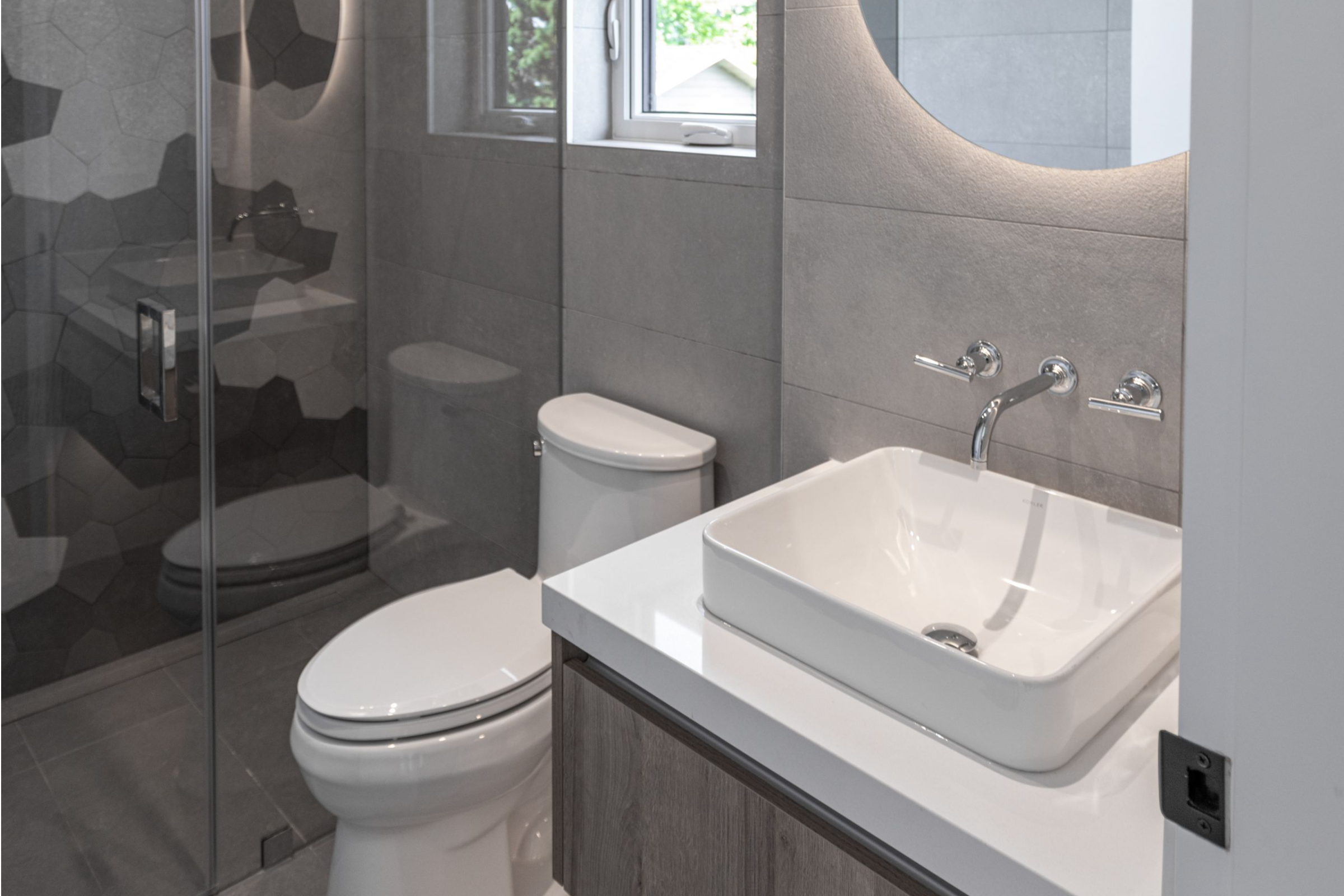
Small bathrooms present unique challenges—but with the right approach, they can be transformed into highly functional and stylish spaces. Rather than viewing limited square footage as an obstacle, treat it as an opportunity to refine your design sensibility and maximize every inch. The key is multifunctionality: every fixture and piece of furniture should serve more than one purpose, whether it’s providing storage, supporting daily routines, or contributing to the overall look.
Striking a balance between storage and aesthetics is crucial. Too much cabinetry can overwhelm a room, making it feel cramped; too little, and you lose valuable utility. Modern cabinet design rises to this challenge by introducing solutions that seamlessly blend storage with visual lightness—think wall-mounted vanities, recessed niches, and compact modular units.
Careful planning is essential in these compact spaces. Instead of settling for off-the-shelf choices, consider custom cabinets and countertops tailored to your layout and needs. Innovative cabinet makers are adept at leveraging every available centimeter, ensuring that even the smallest bathrooms feel organized, uncluttered, and inviting.
Ultimately, optimizing a small bathroom isn’t about making the room bigger—it’s about making it smarter. Thoughtful design choices can help you enjoy all the functions and storage of a spacious bath, without sacrificing comfort or style.
The foundation of an efficient small bathroom lies in its layout. Begin with a detailed floor plan, taking precise measurements of every wall, nook, and doorway. Adhering to cabinet and fixture design standards ensures accessibility and comfort—ignoring these can lead to cramped conditions or unusable spaces.
Proper clearances are vital. For console furniture set on legs, it’s best to leave about six inches between units to maintain a sense of separation and airiness. On the other hand, wall-mounted or freestanding floor cabinets can be positioned directly adjacent to each other, allowing for a denser, yet still functional, arrangement. These subtle distinctions in placement can make a significant difference in both storage potential and visual openness.
When uncertain, consult in-store experts or reputable design guides. Professionals can recommend layouts that maximize usability while respecting essential movement paths and ergonomic standards. For example, ensure there’s enough space to open cabinet doors fully and access drawers, even with other fixtures nearby.
Custom or semi-custom cabinet design is especially advantageous in small bathrooms with unusual shapes or tight confines. By working with a skilled cabinet maker, you can adapt units to fit the room perfectly—no wasted corners or awkward gaps, just smooth circulation and optimized storage.
Design choices play a powerful role in creating the illusion of space. Selecting vanities and cabinets with a light, airy aesthetic—such as those mounted on the wall or standing on slender legs—can visually expand the room. Recessed niches and open shelving further boost the sense of openness by reducing bulk.
Simple, sleek lines are preferable over ornate details or heavy moldings, which can make a compact bathroom feel cluttered. Minimalist design not only streamlines the appearance but also draws the eye smoothly across the space, enhancing the perception of width and depth.
One of the most effective strategies is to use shallower vanities than the standard 19 to 22 inches. Options with depths as little as 12", 16", or 17 5/8" free up valuable floor area and improve movement around the room. Choosing lighter hues, glossy finishes, or two-tone color schemes can also reflect more light, helping the bathroom feel brighter and more expansive.
Proportion matters as well. Oversized furniture will dwarf a small bathroom, while well-scaled console-style vanities or modular units maintain a balanced look. By mindfully pairing layout, color, and form, you can achieve a bathroom that feels open and inviting, regardless of its actual dimensions.
Maximizing storage in a small bathroom requires resourcefulness and a focus on innovative cabinet configurations. Replace standard mirrors with medicine cabinets that offer hidden storage for toiletries and medications. Newer models often incorporate built-in lighting, which not only brightens the room but also visually enlarges the space.
Consider integrating linen cabinets directly onto the vanity. Some feature clever door storage or compartmentalized interiors, centralizing essentials without occupying extra floor area. Above the toilet, an auxiliary cabinet or open shelving can provide a handy spot for spare towels and supplies, making use of vertical space that’s often overlooked.
Another subtle but impactful storage upgrade is the toe-kick drawer—an underutilized space beneath the vanity that’s perfect for bulky items like towels. These drawers can be finished in a lighter tone than the vanity body, maintaining a sense of visual lightness while boosting storage.
When it comes to sinks and counters, opt for smaller or off-centered sinks. This strategy frees up more usable countertop area on one side, increasing flexibility for daily tasks. Shallow counters and compact basin designs not only support better circulation but also create more room for storage drawers or cabinets beneath.
A well-thought-out combination of these features ensures that no square inch is wasted, and your small bathroom stays both organized and attractive.
Turning a compact bathroom into a functional and beautiful retreat is possible with the help of skilled cabinet makers who specialize in small-space solutions. Begin the collaboration with a clear vision of your needs and preferences, but remain open to expert guidance on space-saving innovations.
Prioritize wall-mounted units wherever possible. Not only do they open up the floor visually and physically, but they also simplify cleaning and provide a modern, streamlined look. Slim-depth vanities and cabinetry—particularly those designed specifically for small bathrooms—can dramatically improve spatial flow without forgoing storage.
Integrated lighting, especially within medicine cabinets or around mirrors, is a strategic addition. This feature increases brightness and gives an airy, open feel. Two-tone finishes, such as a lighter color for the toe-kick drawer contrasted with a richer vanity body, subtly boost the room’s perceived size while maintaining hidden storage.
Work with your cabinet maker to mix and match storage solutions: combine large compartmentalized drawers, auxiliary cabinets, and space-saving sink options. This tailored approach ensures your bathroom meets all your practical requirements while embodying your aesthetic style.
Finally, never lose sight of practicality. Every unit, drawer, and surface should serve a purpose, and every design choice should contribute to a harmonious, uncluttered space. By leveraging the expertise of a cabinet design professional, you can create a small bathroom that feels anything but small—proving that thoughtful design truly makes all the difference.

.png)


