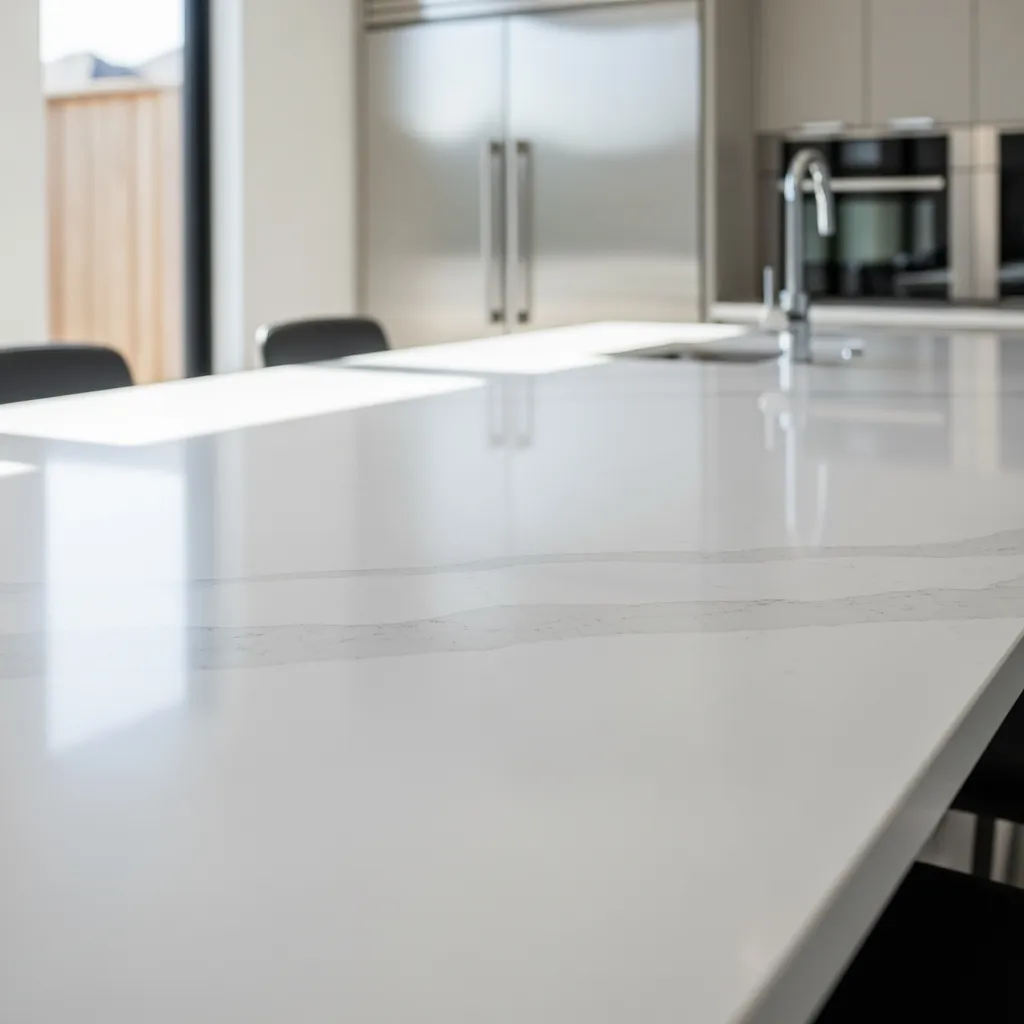
Quartz countertops have swiftly become a staple in modern kitchen design, valued for their unique blend of natural beauty and engineered performance. Unlike traditional natural stones, quartz surfaces are crafted by blending finely ground quartz crystals with resins and color pigments. This manufacturing process creates a material that mirrors the elegant appearance of granite or marble, but with added benefits that suit the demands of today’s busy kitchens.
One of the most significant advantages of quartz is its non-porous nature. Unlike porous stones that soak up liquids and harbor bacteria, quartz surfaces repel stains from food and beverages, and do not support the growth of mold or mildew. This characteristic makes them particularly appealing for kitchens, where sanitation is a top priority.
Durability is another major reason quartz is favored in both residential and commercial projects. The inherent hardness of quartz crystals, reinforced by strong binders, results in countertops that resist chips, scratches, and impacts—perfect for high-traffic areas and active families. The manufacturing process also ensures a consistent appearance, meaning homeowners and designers can expect predictable colors and patterns without the natural imperfections sometimes found in stone slabs.
Beyond practicality, quartz countertops are renowned for their design flexibility. Manufacturers can infuse a wide spectrum of colors and subtle veining, enabling designers to match virtually any cabinet or kitchen style. This engineered stone has become the go-to choice for those seeking low-maintenance elegance that lasts for years without sacrificing visual appeal.
When planning for new kitchen countertops, understanding quartz’s cost structure will help you set a realistic budget. The price tag is influenced by several factors, starting with the slab itself. Mid-range quartz slabs generally cost between $50 and $70 per square foot, while premium varieties with unique colors, veining, or branded names can climb beyond $150 per square foot.
However, the slab is just the beginning. Fabrication—the process of cutting, edging, and finishing the quartz—adds to the overall expense, especially when you select custom edges, integrated sinks, or detailed cutouts. The complexity of your kitchen’s layout and the desired features can significantly impact this portion of the cost.
Don’t overlook supplemental expenses, such as backsplashes, waterfall edges, oversized islands, or intricate edge profiles. Embedded sinks, overhangs for seating, and special reinforcements for commercial kitchens can also raise the final bill. If your project involves transporting slabs over long distances or installing in high-rise buildings, expect additional logistical costs. Ultimately, while quartz is a premium surface, its durability, longevity, and ease of care translate to strong value over the lifespan of your kitchen.
The appeal of quartz countertops goes beyond their looks—they’re designed to require minimal upkeep, making them ideal for active kitchens. Preserving their like-new appearance is straightforward when you follow a few practical care routines.
For everyday cleaning, simply wipe the surface using a soft cloth or sponge dampened with lukewarm water and a drop of mild dish soap. This method efficiently tackles daily spills and crumbs without dulling the surface or damaging the resin binders. For a more thorough clean, especially after heavy cooking, opt for a non-abrasive quartz-specific cleaner. Using such products weekly, or as needed, helps remove stubborn residues while protecting the surface’s finish.
Quartz is engineered to withstand most household challenges, but it isn’t impervious to extreme heat. Always place hot pans or baking trays on trivets or heat pads instead of directly on the counter to prevent warping or discoloration caused by prolonged heat exposure. Equally important, avoid using highly acidic or abrasive cleaners, such as bleach, vinegar, lemon, or harsh chemicals, which can break down the resin and mar the finish over time.
To prevent scratches, never cut food directly on the countertop—use a cutting board for all slicing and chopping. Quartz’s durability resists minor nicks, but sharp blades can degrade the polish and potentially leave lasting marks. Lastly, make it a habit to inspect seams and edges regularly, particularly in high-use areas. Promptly addressing small chips, gaps, or worn joints will help maintain the countertop’s integrity and visual appeal for years to come.
The synergy between countertops and cabinetry defines the overall mood and functionality of a kitchen. Choosing the right cabinet and quartz pairings is crucial for achieving the desired design outcome, whether your goal is modern minimalism or timeless charm.
For those drawn to dramatic contrasts, pairing light-hued quartz—such as crisp whites or soft creams—with dark cabinet finishes like navy blue, deep charcoal, or classic black creates a visually compelling space. This approach highlights the clean lines of both surface and cabinetry, making each element stand out.
If a warm, inviting kitchen is your aim, consider beige or subtly veined quartz paired with natural wood cabinets. The warmth of wood is beautifully offset by the gentle tones of quartz, producing a welcoming environment that feels both refined and cozy. This combination works especially well in family kitchens or open-concept spaces.
Two-tone kitchens are a popular trend, and quartz can serve as the perfect bridge. For example, a neutral quartz surface can tie together white upper cabinets and contrasting darker base cabinets, resulting in a cohesive yet dynamic look. This approach adds interest and depth without overwhelming the space.
Contemporary kitchens benefit from solid-color quartz or counters with delicate veining, installed alongside flat-panel or slab-style cabinets. The simplicity and uniformity of these materials contribute to a sleek, uncluttered appearance. For classic or cottage-inspired designs, opt for softer-hued quartz with Shaker or beadboard cabinetry. Finally, don’t overlook the impact of lighting and hardware: under-cabinet lighting can accentuate the subtle movement in quartz, while hardware choices like brushed nickel or warm brass provide the finishing touch that brings the whole design together.
Quartz countertops are a practical solution for both renovations and new construction projects, providing benefits that appeal to a broad spectrum of users, from individual homeowners to professional cabinet makers and commercial kitchen planners. One of the chief advantages of quartz is its predictable color and pattern, which simplifies planning and installation. Unlike natural stone, where slabs can vary considerably, engineered quartz offers uniformity—making it easier to match seams and integrate with custom cabinetry.
For renovations, quartz’s forgiving installation properties and wide range of available styles allow for seamless updates that elevate the kitchen’s look without extensive demolition. Cabinet designers and remodelers appreciate that quartz gives them control over the finished result, reducing surprises and ensuring a streamlined process from selection to installation.
Homeowners benefit from quartz’s robust construction and hassle-free maintenance. Its resistance to stains, scratches, and microbial growth makes it particularly appealing for families, busy professionals, and anyone seeking a kitchen that looks beautiful with minimal effort. In commercial environments, such as restaurants or cafes, quartz’s hygienic surface and resistance to harsh cleaning protocols add further value, though these projects may require enhanced specifications and can carry higher per-square-foot costs.
Choosing quartz as a countertop material opens up a world of design flexibility. Styles can range from ultra-modern to timeless traditional, and the ability to coordinate with custom cabinetry means you can adapt to evolving tastes or functional needs. For homeowners, designers, and cabinet makers alike, quartz countertops represent a smart investment—delivering long-term value, aesthetic style, and practical performance in any kitchen setting.

.png)


